Financial aid at elite boarding schools is more accessible and (anecdotally I've heard) more generous than most families expect. Nonetheless, many families (even higher earning ones) assume they will not qualify or find the process opaque or intimidating.
How Financial Aid Is Structured
Unlike federal higher education aid, boarding school financial aid is not based on the FAFSA. Each school runs its own aid program, funds it from its own endowment, and uses its own formula to calculate a family's demonstrated need.
For admitted students at all eight schools, aid is structured as a grant, and not a loan. You do not repay it. The aid is recalculated annually, meaning your package can change year to year as your financial circumstances change.
Aid packages at these schools can be substantial. At well-endowed schools, packages covering 50–100% of the full cost of attendance are not uncommon for families with significant demonstrated need. Aid packages will also cover non-tuition costs (e.g., books, travel programs, sports / extracurricular fees and dues).
How Need Is Calculated
Schools calculate demonstrated need by comparing the full cost of attendance (tuition, room, board, and sometimes technology and travel) against what the school determines a family can contribute — the 'Expected Family Contribution' (EFC).
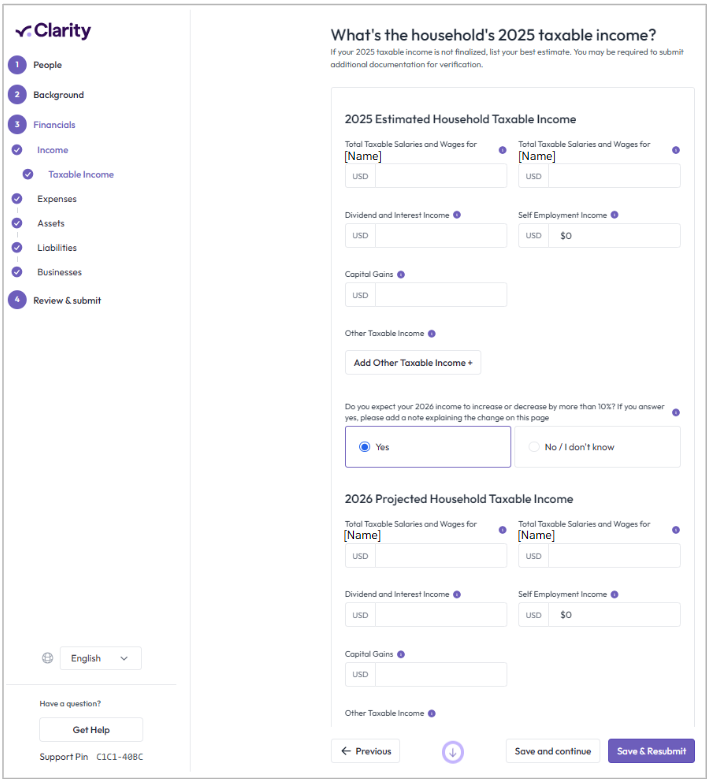
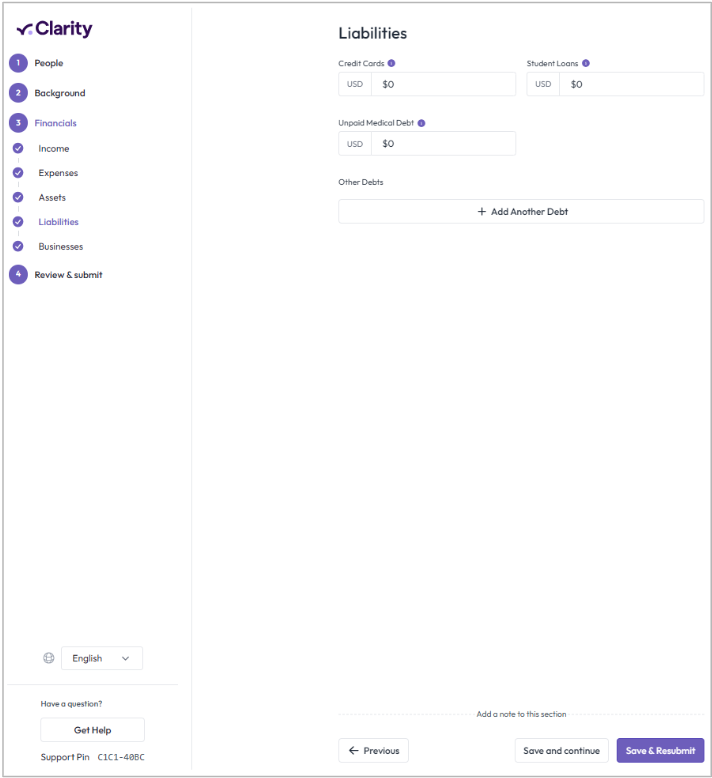
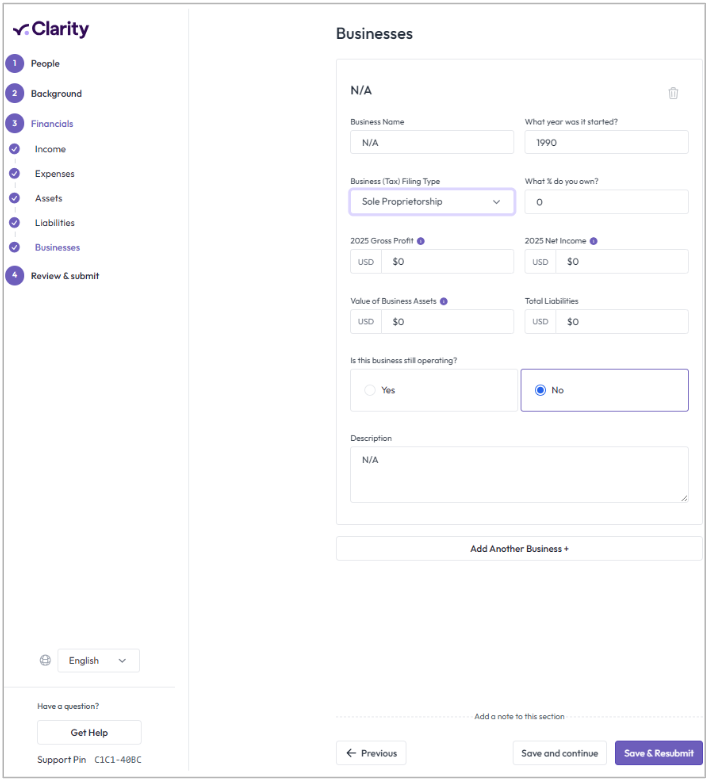
The variables that feed into the EFC calculation include: household income (both parents/guardians), assets (investment accounts, savings, retirement funds, real estate equity), business ownership and valuation, number of dependents, and in some cases, non-custodial parent financial information.
A few things worth flagging (based entirely on web research vs. personal knowledge / experience):
- Home equity and business assets can affect your calculated need
- Non-custodial parents are typically expected to contribute, even in cases of complex family structures
- The formula differs school to school, which is why comparable families can receive meaningfully different aid packages from different institutions
The Application Process: Clarity
Financial aid applications at all eight schools are submitted through Clarity, a centralized platform designed specifically for independent school aid. This is both convenient (one application feeds multiple schools) and detailed.
A few practical notes on the Clarity process:
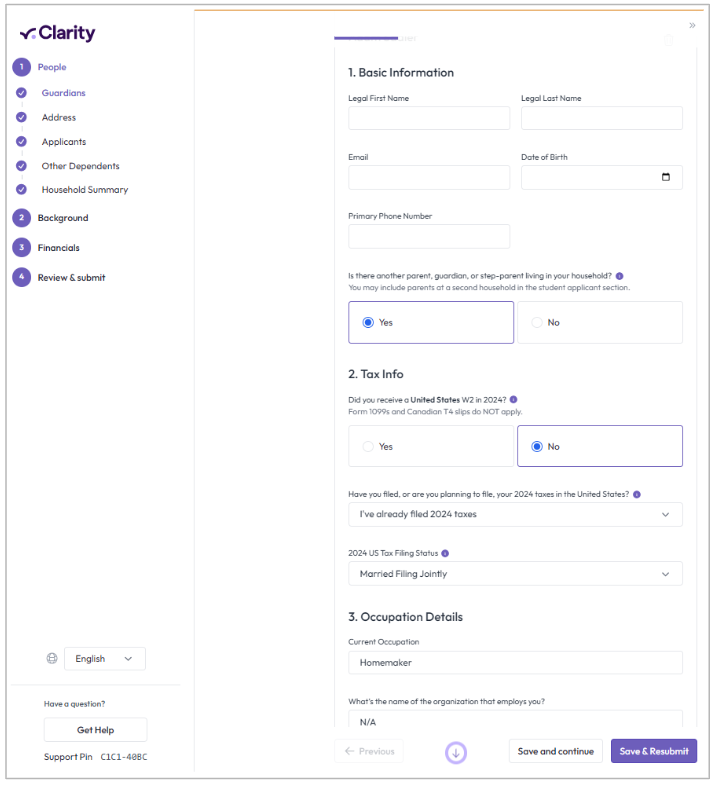
- Clarity automatically pulls prior-year tax returns, which reduces the document-gathering burden
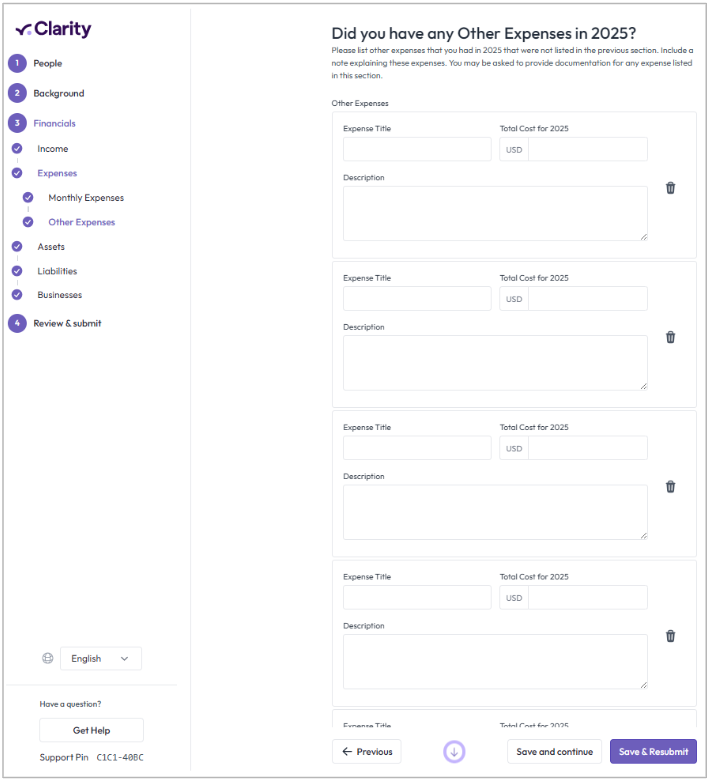
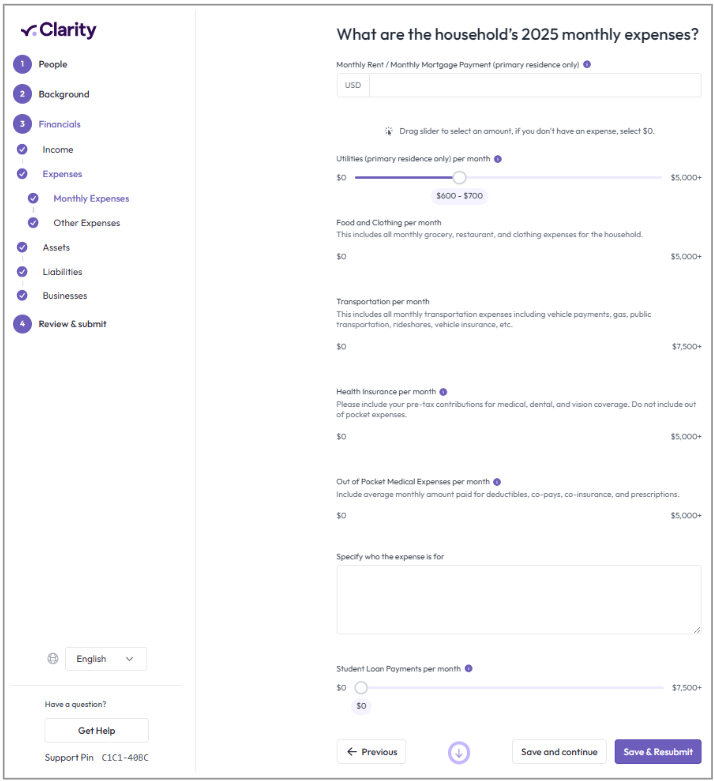
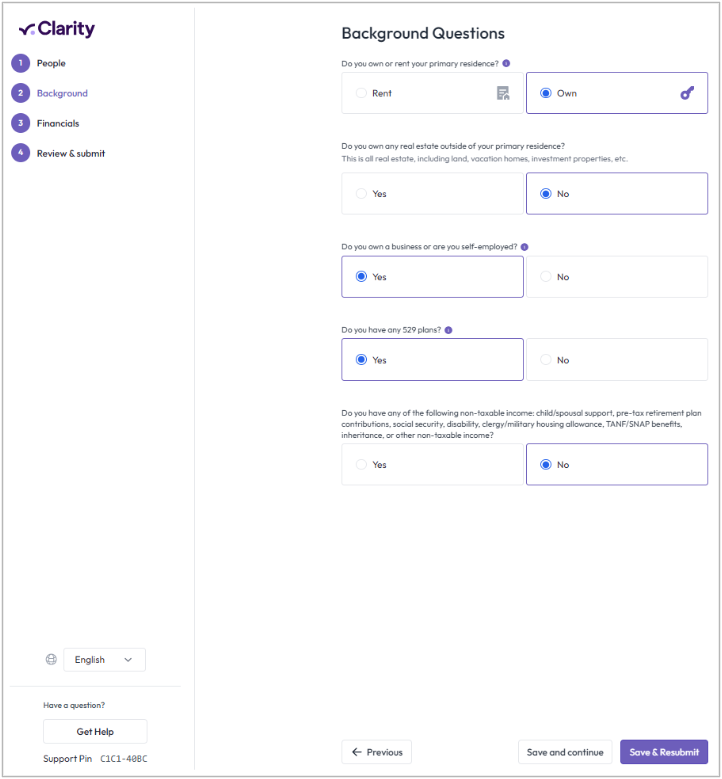
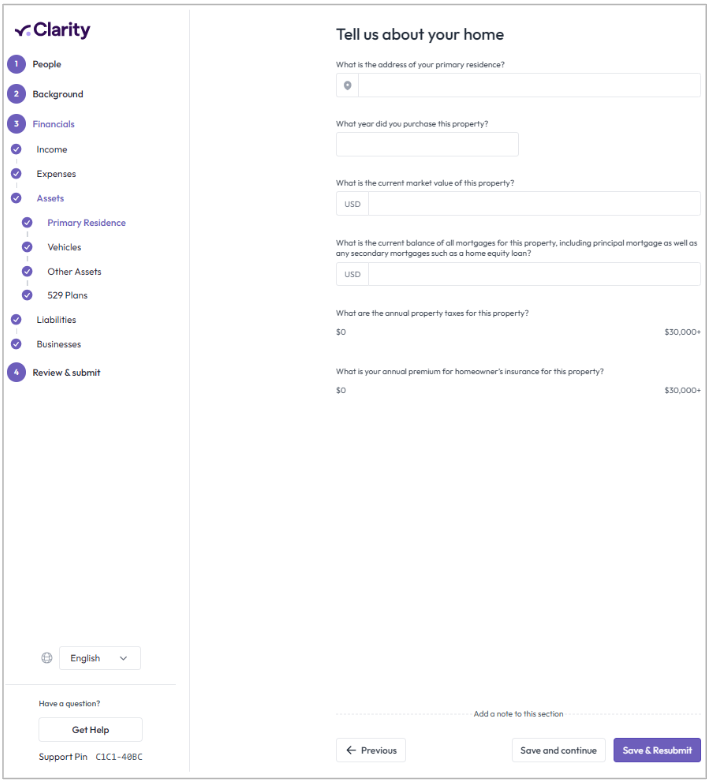
- The application asks detailed questions about income, assets, expenses, and family structure — it is comprehensive
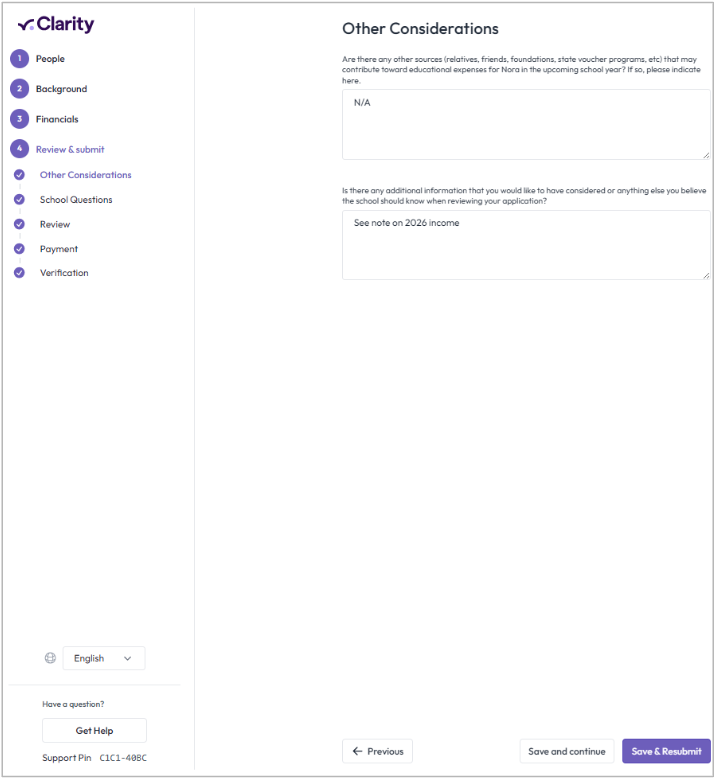
- There are optional narrative sections where families can provide context about their financial situation — these are worth using if your circumstances aren't fully captured by the numbers
- Deadlines vary by school; confirm the aid application deadline for each school separately, as they may differ from the admissions application deadline (our deadline this year (2026) was January 31st, which is c.2 weeks after applications (sans Andover) were due).
- Families applying for aid must submit Clarity separately and on time — late submissions can complicate your aid eligibility
What to Expect
Once you've submitted your request for aid, continue to monitor for follow-up requests made by schools. Deerfield e-mailed us to request my 2025 W2s, which we promptly submitted via Clarity.
Aid offers typically arrive around the same time as admissions decisions. The offer will specify: the school's calculated cost of attendance, the Expected Family Contribution, and the grant amount.
Because formulas differ, expect variation across schools. A family may receive a generous package from one school and a less compelling one from another — even if both schools theoretically meet 100% of demonstrated need. This is why applying broadly (if cost is a concern) is important.
Aid packages can be appealed if your family's circumstances have materially changed or if you believe the calculation doesn't accurately reflect your situation. Schools have financial aid officers who handle these conversations and, in our experience, approach them with genuine good faith.
Our Experience
We applied for financial aid through Clarity. I'll be candid: the process is personal. We answered detailed questions about income, assets, and expenses, including optional narrative prompts. And to boot, as part of Lawrenceville's financial aid questionnaire, we were asked to note any vacations we took in 2025.
That said, the platform itself was well-designed and the process was manageable. The automatic tax record integration was a genuine time-saver.
Note: This article was written before decision day (March 10th); therefore, I cannot share details about admittance or financial aid decisions (these updates will likely be posted as a separate article vs. updated here).
Screenshots
I am hoping these screenshots demystifies what is asked of you. The images bring you top to bottom through each category (left hand navigation). I left the form questions (right side) to help you get a sense for the nature / depth of the questions.