Every family researching elite boarding schools finds the tuition figure quickly. What's harder to find — and what this article is specifically about, are the costs that don't appear on admissions pages, don't show up in financial aid calculators, and don't get discussed at information sessions.
These aren't nefarious omissions. They're simply the natural byproduct of a comprehensive residential experience that extends well beyond the classroom. But they're real, and they accumulate. This article names them.
The Costs of Getting There: Application-Phase Spending
The financial commitment begins before you've submitted a single application.
Test Preparation
SSAT or ISEE preparation — whether through a tutor, a prep course, or a combination — represents a meaningful pre-application expense. A private tutor typically runs $100–$250+ per hour. Structured prep courses vary widely in cost. Our approach is detailed in SSAT Preparation: Strategy and Timeline; the short version is that we invested several months of focused preparation without a private tutor, but many families take a different approach.
Campus Visits
Official campus tours are not optional in spirit — even if they're not formally required. Schools notice when applicants haven't visited (or engaged meaningfully). If you're applying to six to eight schools, visiting even a subset of them involves real travel costs. We spent upward of $1,500 on visits to schools that are, by regional standards, relatively close to us. Families traveling from the South, Midwest, or internationally will spend considerably more.
Application Fees
At ~$50–$75 per school, application fees across a full list of eight schools run $400–$600. Request fee waivers proactively if you're applying for financial aid — most schools offer them.
The First Year: Upfront Setup Costs
Before your child attends a single class, there's a set of one-time costs associated with getting them ready.
Technology
A laptop — and at some schools, an iPad — is required. If your child doesn't already have a suitable device, budget $1,000–$2,000 here.
Cold-Weather Clothing
This one may be a surprise to families from warmer climates. New England winters are genuinely cold — and not in a 'wear a fleece' way. A proper winter coat, waterproof boots, and appropriate layering are non-negotiable. Budget $400–$800 if starting from scratch.
Bedding and Dorm Essentials
Dorms are furnished but not outfitted. Bedding, towels, a shower caddy, hangers, basic organizational items, and a few personal touches can run $300–$600 depending on how elaborate you choose to go.
Ongoing Annual Costs
Activity and Sport-Specific Fees
Most sports are included in tuition. But sport-specific equipment — skates, sticks, helmets, ski gear — is typically the family's responsibility. High-equipment sports can add $300–$1,200+ per year. Private coaching, if pursued, is an additional cost.
Optional Travel Programs
All eight schools offer optional domestic and international travel programs — from spring break service trips to full-term exchanges. These are extraordinary opportunities, but they're not included in tuition. Individual programs can run $2,000–$8,000+ each.
Spending Money
Students need accessible funds for: local restaurants and coffee shops, school merchandise, toiletries and personal items, transportation, and various incidentals. The right amount varies by student and school location, but $100–$200/month is a reasonable baseline for a relatively modest spender.
During my daughter's summer at Exeter, inclusive of treating herself to ice cream and a couple meals in the town, she spent between $175–$250 per month.
Laundry
Laundry is done either through coin-operated facilities or contracted services that pick up and return washed clothes.
Regarding coin-operated: Not all dorms are equipped with an in-house laundry machine / dryer. This means your child may need to trek to the nearest dorm that is equipped with in-house units. During campus tours, I did not dwell on this question too much; my gut sense (based on the limited times I asked this question) is that more often than not, there is a laundry in the dorm; and it's only the unlucky few dorms per school (if even that) that do not have in-house units.
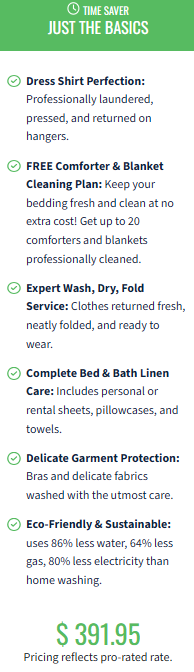
Regarding contracted services: This is what we signed my daughter up for during Exeter Summer. We paid $166 for the summer for the 'Basic Plan.' Important to note that only wash and dry of basic clothes are included in that price. At their discretion, the service will take clothes they deem require more special handling and will launder them appropriately — and then charge you for it. We found this out when we were charged $20 to launder a 100% cotton $7.99 Gap dress my daughter threw in with her clothes. Also, the pick-up is weekly; and if you (like my daughter) miss a week, there are no make-ups. For the regular school year (where there's more scale and cost efficiencies), the cost is about 50% less per month; E&R's Exeter 'Basic Plan' is: $392 for the school year.
The Emotional and Opportunity Costs
I want to name two costs that don't appear on any balance sheet but are real nonetheless.
The first is the opportunity cost of the money itself. Directing $70,000–$90,000 per year toward tuition means those funds aren't compounding elsewhere — not in a college savings account, not in other investments, not in other experiences. For families who are stretching financially to make boarding school work, this tension is worth naming and working through explicitly, rather than treating it as something that resolves itself.
The second is the cost of separation. Your child's boarding school years are also their adolescent years. The daily texture of family life — dinner conversations, spontaneous interactions, the casual closeness of proximity — changes fundamentally when your child lives away. This is not a reason not to go. But it's a real cost, and families who acknowledge it beforehand tend to navigate the transition more gracefully than those who discover it afterward.